
Ruaha National Park
Big country, big lion prides, and hardly anyone else around.
- Size
- 20,226 km²
- Established
- 1964
- Circuit
- Southern Circuit
- Best time
- Jun–Nov
At a glance
Ruaha is the largest national park in Tanzania, and one of the emptiest of people. In the dry season the animals gather along the Great Ruaha River, and almost nobody is there to watch them.
It sits on an ecological crossroads, where the acacia savanna of East Africa meets the miombo woodland of the south, and that overlap is what makes the species list so unusual: greater and lesser kudu in the same park, and sable and roan alongside the usual plains animals. The lion population is among the largest anywhere on the continent, and the prides are unusually big.
The catch is getting there, and the commitment. You fly in, it costs more per night than the north, and it doesn't work with a short trip. What do you get in return? The thing most people say they want and few actually book: a park where a sighting is all yours, for as long as you want to sit with it, with no queue of vehicles behind you.
So, why come here?
Ruaha is what people mean when they say they want somewhere with nobody else around.
It's the largest national park in Tanzania, you reach it by light aircraft, and you can go most of a day without seeing another vehicle. The density of lions is among the highest anywhere on the continent, and the prides are unusually big. Twenty-plus animals is normal here in a way it isn't in most parks, and almost nobody's watching them.
It also sits on a genuine ecological crossroads, where the acacia savanna of East Africa meets the miombo woodland of the south. Species overlap here that overlap almost nowhere else: greater and lesser kudu in the same park, and sable and roan antelope alongside the usual East African plains animals. If you're on your third or fourth safari, that list is the exciting part.
The trade-off is real, so let's be upfront about it. It takes a commitment of days and money: you fly in, it costs more per night than the north, and it doesn't work with a short trip. We wouldn't suggest it for anybody's first four days in Tanzania. But on a second visit, for someone who found the crowd of vehicles at a Serengeti leopard sighting a bit disheartening? It's the best park in the country.
What you'll see
Lion. The reason to come. Ruaha holds around ten per cent of the world's remaining lions, and the prides are exceptionally large. Watching a pride of twenty work a stretch of the Great Ruaha in the dry season, with nobody else there? That's a completely different experience from sharing the same sighting with fifteen vehicles.
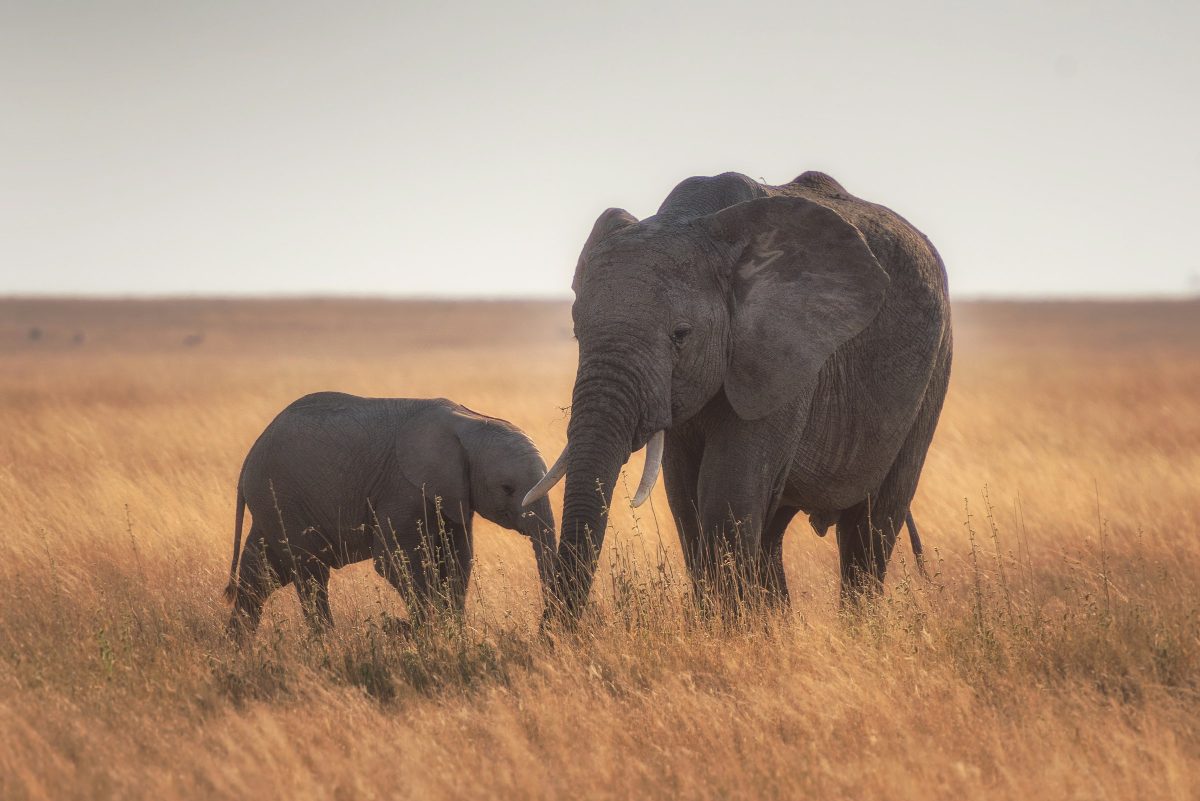
Elephant in large numbers, crowding along the river as the dry season bites. They dig in the sandy riverbed for water, just the way Tarangire's elephants do.
Greater and lesser kudu. Both of them, in the same park, which is genuinely unusual. Ruaha is one of the best places in Africa to see greater kudu.
Sable and roan antelope in the miombo. Both are hard to find, and both are worth the effort.
African wild dog. They're here, in one of the more important remaining populations. Sightings are never reliable, but they do happen.
Leopard and cheetah both live here, leopards along the rivers and streams and cheetahs on the more open ground.
Birds. Over five hundred and seventy species, and that same ecological overlap applies, so you get southern and northern species in one place. December to April brings the migrants.
What the land is like
The Great Ruaha River runs along the eastern edge of the park, and everything here revolves around it. In the dry season it shrinks to a chain of pools in a wide sandy bed, and every large animal for miles around comes to those pools. That's what makes the game viewing so concentrated from about June onwards.
Away from the river, it's rolling miombo woodland, Brachystegia, which flushes a startling coppery red when the new leaves come out. It's broken up by rocky escarpments and opens out into plains. Baobabs are everywhere, and Ruaha's are enormous, some of them hollowed out and scarred where elephants have worked at the bark for moisture.
The park spans roughly 750 to 1,900 metres in altitude, which gives it a far wider range of habitats than its size alone would suggest. It also forms the core of the much larger Ruaha-Rungwa ecosystem, one of the biggest continuous protected landscapes left anywhere in Africa.
What about the Great Migration?
No part of the Serengeti migration reaches Ruaha. It's in the centre-south of the country, in an entirely separate ecosystem.
What Ruaha has instead is a very strong dry-season gathering. As the Great Ruaha shrinks to pools from about June, the animals funnel onto the river, and by September and October the numbers along it are remarkable. In the wet season, from about December to April, there's water everywhere, the animals spread out through the miombo, and the park becomes a place for birding and scenery instead of big game.
That seasonal swing is sharper here than almost anywhere else in Tanzania, so let it decide when you come.
Things to do here
Game drives along the Great Ruaha in the dry season, when the park is at its best. Full days with a packed lunch are worth it here more than almost anywhere, because the distances are big and the rewards come from staying out.
Walking safaris with an armed ranger. They're allowed, they're excellent, and in a park this empty you really are on your own out there.
Night drives run in some areas, turning up genets, civets, porcupines and, now and then, a leopard on the move.
Fly-camping is offered by some operators: a night away from the main camp, under canvas or under a net. It's the closest most people will get to how safaris were run fifty years ago.
Birding here is exceptional and underrated. If birds are your thing, it's worth planning the whole trip around them.
How to get there
By air. Light aircraft fly daily from Dar es Salaam and Iringa, with connections from Nyerere and Zanzibar. It's a couple of hours from the coast. This is how pretty much everyone arrives, and it's what we'd recommend.
By road from Dar es Salaam, it's a very long day: ten hours or more via Iringa. From Iringa itself, it's a few hours on a rough road. It saves money, but it costs you the better part of two days.
Putting it together. Ruaha pairs naturally with Nyerere. There's a short flight between them, and together they make a proper southern circuit of eight days or so. Combining Ruaha with the Serengeti means flying across the country, and you'll need twelve days or more.
Park fees are per person, per twenty-four hours, and set by TANAPA.
Where you could sleep in Ruaha
There's more to it than game drives
Parks that go nicely with Ruaha
Nyerere
Boat safaris, walking safaris, and hardly another vehicle in sight.

Serengeti
Fourteen thousand square kilometres, and the herds decide where the action is.

Ngorongoro
Picture a collapsed volcano twenty kilometres across, with walls on every side.

Tarangire
Giant baobabs, and more elephants than anywhere else on the circuit.