Nyerere National Park
Boat safaris, walking safaris, and hardly another vehicle in sight.
- Size
- 30,893 km²
- Established
- 2019
- Circuit
- Southern Circuit
- Best time
- Jun–Nov
At a glance
Nyerere was carved out of the northern Selous in 2019. It's built around the Rufiji River, and the river is what makes it so different: here, you can go on safari by boat, and you can walk.
Those two things change the feel of a day more than any lodge upgrade ever will. On the water, you're at eye level with hippos and crocodiles, drifting past elephants on the bank. On foot, you're reading the ground instead of driving over it. You can't do either across most of the northern circuit, and together they make the south a genuinely different trip, not just a cheaper version of the same one.
So, why come here?
Nyerere is one of the largest national parks in Africa, and there are two things you really need to know about it. You can head out on a boat, and you won't see many other people.
It became a national park in 2019, carved out of the northern section of what used to be the Selous Game Reserve. That's why older books and older operators still call it the Selous. The Rufiji River runs right through it, and that river is the whole point: it makes possible a kind of safari the northern circuit simply can't offer.
A boat safari changes your eye level. Instead of looking down from a vehicle, you're level with hippos, level with crocodiles, drifting past elephants that have come down to the bank to drink. Add walking safaris, which are allowed here but not in most of the north, and you've got a genuinely different trip, not just a cheaper version of the same one.
Here's the honest catch: the game viewing is different, not better. You'll see fewer big cats than in the Serengeti. Come for the boats, the walking and the wonderful emptiness.
What you'll see
Hippo and crocodile in remarkable numbers along the Rufiji and in the lakes beside it. From a boat, up close, they stop being scenery very quickly.
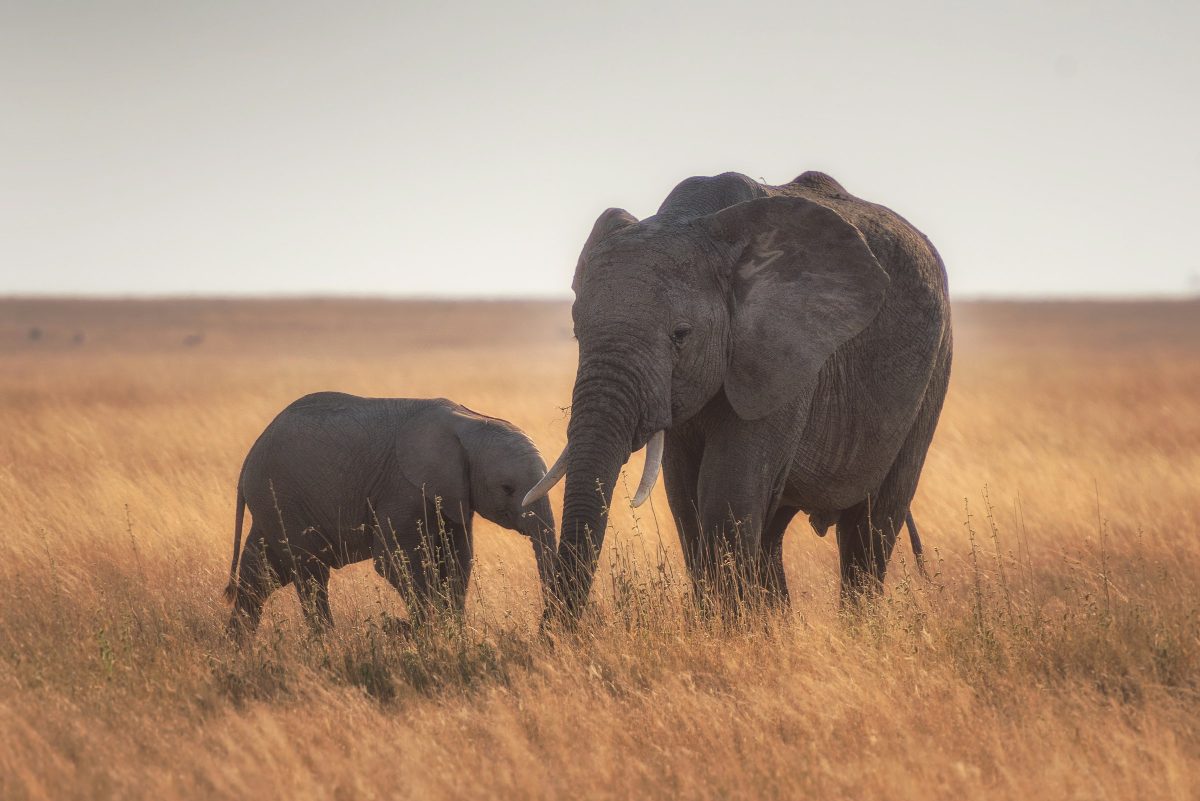
Elephant. Big populations, bouncing back strongly after the heavy poaching of the 1970s and 2000s. In the dry season they come down to the river throughout the day.
African wild dog. If you know what you're looking at, this is the headline. The greater Selous ecosystem holds one of the largest remaining populations of this genuinely endangered animal, and the denning season, around June to August, gives you the best chance of finding a pack.
Lions are here and fairly common, though there are fewer of them than in the Serengeti.
Buffalo, giraffe, zebra, wildebeest, impala and greater kudu right across the park. Sable antelope live here too, and they're a real prize.
Birds. Over four hundred species, and the river makes it exceptional. Look for African skimmers on the sandbanks, fish eagles, carmine bee-eaters nesting in the riverbanks in season, and Pel's fishing owl, if you're keen enough to go looking.
What the land is like
The Rufiji is the largest river in Tanzania, and it dominates everything here. It braids across the park in channels and sandbanks, spilling into a chain of shallow lakes (Tagalala, Manze and Nzerakera) that connect to the main river and to each other through seasonal channels.
Away from the water, it's miombo woodland, doum palms, riverside forest and open grassland, and the mix keeps changing as you go. The Stiegler's Gorge area, where the river squeezes into a steep-sided gorge, is the most dramatic landform in the park.
It's worth knowing that a large hydroelectric dam has been built at Stiegler's Gorge, inside what is now the national park. It's a big and controversial piece of infrastructure, and it has changed part of the landscape. We'd rather tell you now than have you arrive and wonder why nobody mentioned it.
What about the Great Migration?
Nyerere doesn't see any part of the Serengeti wildebeest migration. It's in the south of the country, in a completely different ecosystem.
Its seasons are driven by water, not herds. In the dry months, roughly June to October, the animals gather along the river and the lakes and the game viewing is at its best. During the long rains from March to May, much of the park becomes hard to get around, and many camps close completely.
Planning to combine north and south in one trip? Good news: the dry seasons line up nicely. The same months that put the herds at the Mara River also put the animals on the Rufiji.
Things to do here
Boat safaris on the Rufiji. The reason to come. They usually last two to three hours, often in the late afternoon so you're on the water for the best light, and they're nothing like a game drive. You approach the animals from the water, and they react to that differently from a vehicle. Elephants drinking on a bank will often just carry on as if you weren't there.
Walking safaris with an armed ranger, allowed here in a way they aren't across most of the northern circuit. Half a day on foot will teach you more about the bush than a week of driving. You'll learn what the tracks mean, which dung belongs to which animal, and how much of the landscape is really information, not just scenery.
Game drives. The network of tracks in the north of the park, around the lakes off the main river, is good and mostly empty. Full-day drives with a packed lunch are worth it here, because the distances are big.
Fly-camping. A night out away from the main camp, under canvas or a mosquito net, with a guide and a campfire. It's the closest most people will get to how safaris were run before lodges, and it's genuinely memorable, not just rustic.
Fishing for tigerfish and catfish on the Rufiji, catch-and-release, which very few Tanzanian parks allow at all.
Birding from the boat is the easiest good birding in Tanzania. Think skimmers, fish eagles, herons and, in season, carmine bee-eaters nesting in the riverbanks in colonies of hundreds.
How to get there
By air is how nearly everyone arrives, and it's what we'd recommend. Light aircraft fly daily from Dar es Salaam in about forty-five minutes, and from Zanzibar too, which makes a bush-and-beach trip in the south unusually easy.
By road from Dar es Salaam is possible, but it takes most of a day on roads that vary a lot with the season. It saves money, and costs you a day each way.
Combining it with the north. There's no quick road between Nyerere and the Serengeti. They're at opposite ends of a very large country! Doing both means flying, and it means a trip of twelve days or more to make it worthwhile.
Park fees are per person, per twenty-four hours, and set by TANAPA, with separate fees for boat and walking activities.
Where you could sleep in Nyerere
There's more to it than game drives
Parks that go nicely with Nyerere

Ruaha
Big country, big lion prides, and hardly anyone else around.

Serengeti
Fourteen thousand square kilometres, and the herds decide where the action is.

Ngorongoro
Picture a collapsed volcano twenty kilometres across, with walls on every side.

Tarangire
Giant baobabs, and more elephants than anywhere else on the circuit.